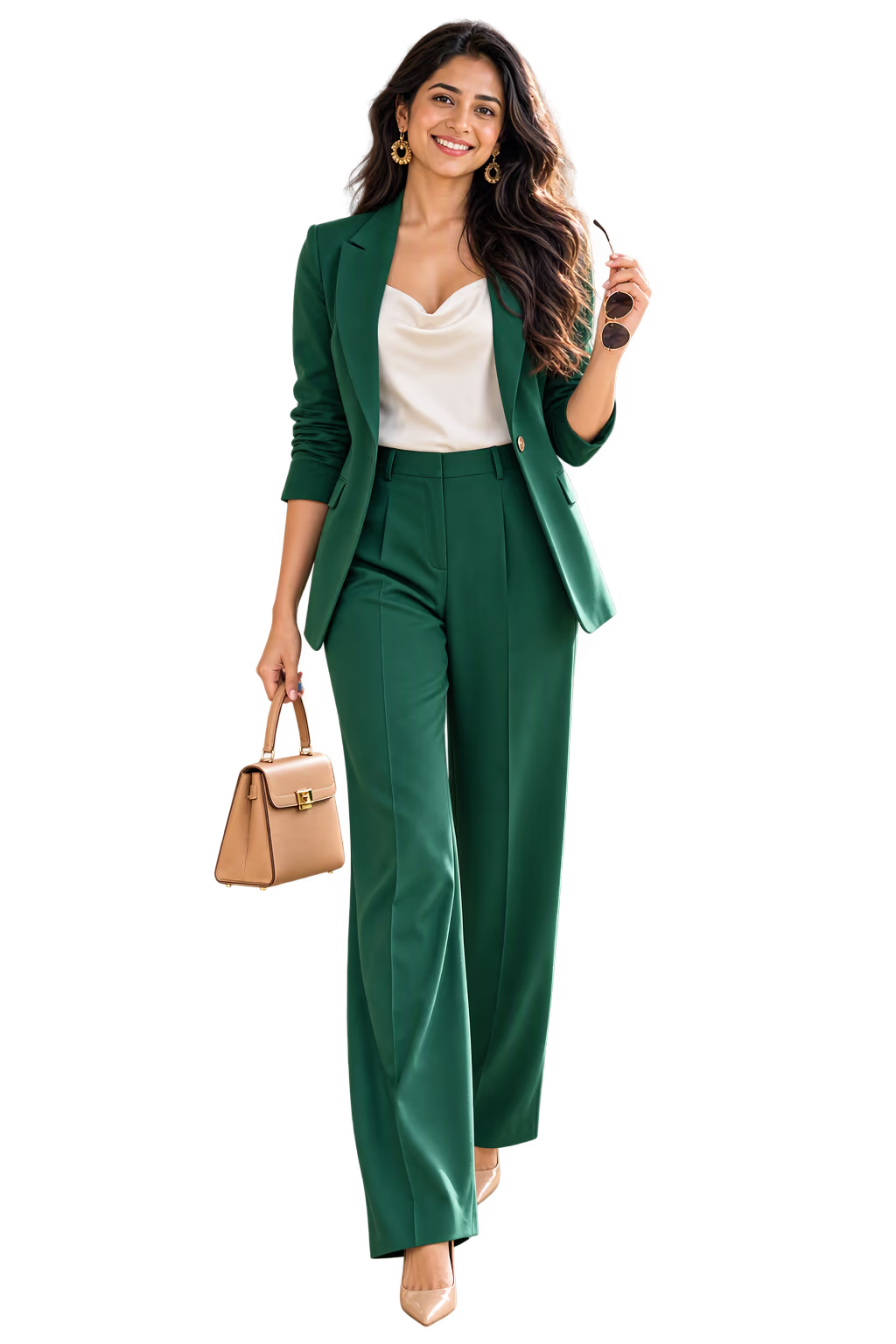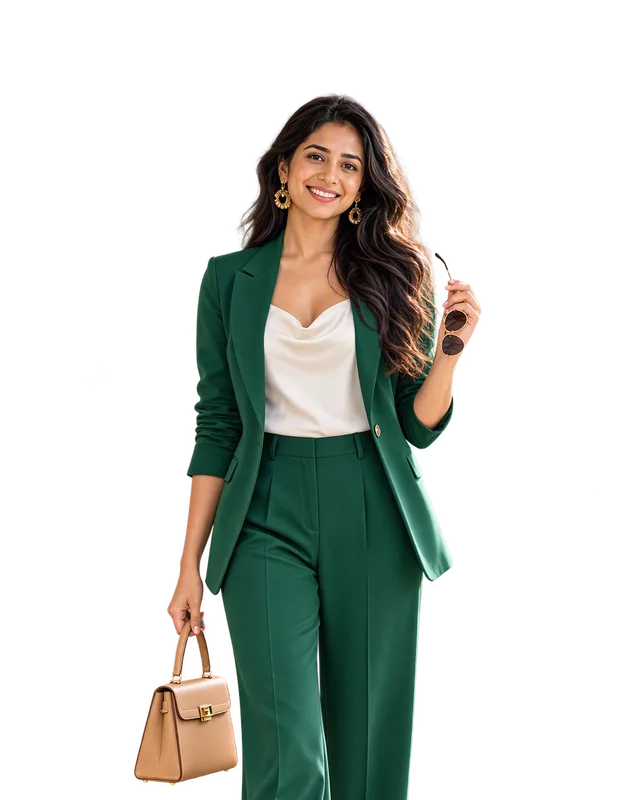


If you cannot find out what the office wears, dress for a business casual office and carry a blazer. Being a little too neat is the smaller risk.
Interview outfits by kind of office
| Kind of office | Women | Men |
|---|---|---|
| Formal: banks, law, consulting | A dark pantsuit or skirt suit, a plain blouse, low closed heels or flats | A dark suit, a white or light blue shirt, a plain tie, dark leather shoes |
| Business casual: most offices | A blazer, a blouse or a fine knit, neat pants or a knee-length skirt, flats or loafers | A blazer, a shirt with a collar, wool pants or chinos, leather shoes. No tie needed |
| Casual: startups, tech | Dark jeans with no rips or neat pants, a plain shirt or knit, a blazer, clean sneakers or loafers | Dark jeans with no rips or chinos, a shirt with a collar or a polo, clean leather sneakers or loafers |
| Creative: design, media, fashion | The business casual outfit, with one piece that shows your taste: a color, a good jacket, a bag | The same, with one piece that shows your taste: a textured jacket, a color, good shoes |
| A store, a restaurant, a warehouse | Neat pants, a plain top with sleeves or a polo, closed flat shoes | Neat pants or dark jeans, a polo or a shirt with a collar, clean closed shoes |
Some words from the table: a blazer is a jacket you can wear without matching pants. A polo is a short-sleeved knit shirt with a collar. Chinos are plain cotton pants. Loafers are flat leather shoes with no laces.
The one rule: dress one step up
Find out what people wear in that office on a normal day. Then dress one step more formal.
- They wear T-shirts and jeans? Wear a shirt and neat pants.
- They wear shirts and neat pants? Add a blazer.
- They wear blazers? Wear a suit.
This shows that you care, and that you fit in.
How to find out what they wear
- Ask. Send the recruiter one line: "What is the dress code in your office?" This is a normal question.
- Look at photos. The company website and its social pages show what people really wear.
- Think about the job. A bank is more formal than a design studio.
- Still not sure? Go more formal. You can take a blazer off. You cannot add one you did not bring.
What women wear to an interview
Four outfits cover almost every interview. Pick the one that sits one step above the office.
- The suit. A navy or charcoal pantsuit, a white or light blue blouse, and low heels or flats. For banks, law and consulting, and for a last round at any formal firm.
- A blazer and pants. A navy blazer, a cream blouse, gray or black ankle pants and loafers. This is the outfit for most offices.
- A dress and a blazer. A plain knee-length dress in navy or dark green, with a blazer over it and flats. As neat as the pants outfit, and easier on a hot day.
- For a casual office. Dark straight jeans, a fine sweater or a plain shirt, a blazer, and clean white sneakers or loafers.
Sit down in the outfit before the day. A skirt should still reach your knee, and a blouse should not gape between the buttons. Carry one bag that holds a folder. Keep jewelry small and quiet.

What men wear to an interview
- The suit. A navy or charcoal suit, a white shirt, a plain tie in navy or dark red, and black or dark brown leather shoes. For banks, law and consulting.
- A blazer, no tie. A navy blazer, a light blue shirt with a collar, gray wool pants or beige chinos, and brown leather shoes. This is the outfit for most offices.
- A shirt and chinos. A plain shirt with a collar, tucked in, with navy chinos, a leather belt and clean leather sneakers or loafers. For a casual office. Carry a blazer in case.
Match your belt to your shoes. Wear socks long enough to cover your leg when you sit. Iron the shirt, the collar most of all. For men choosing a shirt for their pants, our shirt and pant combination chart lists the safe pairs.

Business casual and casual interviews
When the recruiter says "business casual", you do not need a suit. You still need a collar or a neat blouse, and pants that are not jeans. Add a blazer: that is your one step up. Our guide to business casual vs business professional shows each dress code piece by piece.
When they say "we are casual here", dark jeans are fine. Pick a pair with no rips and no fading, and wear a shirt or a fine sweater with them, not a T-shirt with words on it. Clean shoes matter more in a casual outfit, because there is less else to look at.
When they say "no need to dress up", believe half of it. Leave the suit at home and wear the casual outfit from the table. Do not arrive in what you wear on a Sunday.
A store, a restaurant or a first job
You do not need a suit for these. You need to look clean and ready to work.
- A store. Look at what the staff wear, and dress one step up: neat pants and a polo or a plain top. For a clothing store, wear something that would look right on its shop floor.
- A restaurant or a cafe. Dark pants, a plain shirt or polo, and closed shoes you can stand in. Tie long hair back.
- A first job as a teen. Neat pants or dark jeans with no rips, a shirt with a collar or a plain top, and clean shoes. A hoodie stays at home.
What to wear to a video interview
Wear what you would wear in person, pants included. You may have to stand up.
- Pick a plain color near your face, and leave small patterns for another day.
- Do not wear the color of the wall behind you.
- Open the camera ten minutes early. Sit facing a window or a lamp, and check how the outfit looks.
Colors that work
- Safe: navy, gray, white, light blue, beige.
- A small touch of color is fine. A scarf, a tie, a top under a blazer.
- Skip: loud prints, very bright colors, and big logos.
Pick a color that looks good next to your face. Our guide on what colors look good on you has a ten-minute test you can do at home.
What not to wear to an interview
- Wrinkled or stained clothes.
- Ripped jeans, shorts, gym clothes or flip-flops.
- A T-shirt with words or a big logo.
- New shoes that hurt, or heels you cannot walk in.
- Clothes you keep pulling at.
- Strong perfume, and noisy or very large jewelry.

Interviews in India
At most offices in India, formal clothes are the safe choice for an interview, even where the staff dress down day to day. Banks, consulting firms and many multinational companies often expect a blazer too.
Women
Three outfits work. A plain kurta (a long top) with straight pants, and a dupatta (a long scarf) pinned in place if you wear one. A cotton or silk-blend saree in one calm color, with a simple blouse, pinned so you do not have to fix it. Or a plain shirt with trousers, and a blazer for the formal firms. Wear closed flats or low block heels. Leave heavy embroidery, mirror work and bangles that make noise for another day.
Men
A white or light blue full-sleeved shirt, tucked in, with navy, charcoal or black trousers. Black or brown leather shoes, with a belt in the same color. Add a tie and a blazer for banks, consulting and last rounds.
Campus placements
If your college's placement cell has sent a dress code, follow it. If not, wear the outfits above. Iron everything the night before. Carry a second shirt if you have more than one interview that day. December mornings are cold in the north, so wear a plain dark sweater or a blazer over the shirt: our guide to office wear in India has a winter part, city by city.
In the hot months, pick cotton or a light wool mix. Carry your blazer and put it on when you reach the building.
The night before
- Try on the full outfit, with the shoes.
- Check for stains, loose buttons and loose threads.
- Iron it and hang it up.
- Clean your shoes.
- Pack your bag: copies of your resume, a pen and water.
- Check the weather. Take an umbrella or a coat if you need one.
Then stop thinking about clothes. You are ready.
An interview outfit from your own closet
Ukti is our app. You photograph your clothes, one piece at a time or several laid out in one photo. Once your closet has ten pieces, it builds outfits from your own clothes: a safe one, a bold one and a stretch. Pick "big meeting" as the occasion, or type the day in your own words, such as "job interview at a bank".
Each outfit gets a "suits you" score out of 10. You can see a picture of you wearing the outfit before the day. Check its pick against the table above, because the office decides what is right.
This guide is our own advice, written for people who have an interview and a normal closet. On 18 November 2026 we checked it against Indeed's guide to dressing for an interview (updated 15 June 2026), which sorts offices into casual, business casual and business formal, as we do. Offices differ, so the recruiter's answer beats any guide, this one too.